
Has There Ever Been a Better Time for Change?
Those of us marketing and promoting positive causes have a lot to be worried about right now. Current societal, economic and political trends are making Americans more pessimistic by the day. And with no clear solutions in sight, that pessimism can quickly turn into apathy. In the face of overwhelming negativity, it’s much easier to stop caring than it is to push for a positive change.
But not today! Because in spite of all appearances, there’s never been a better time to start a new mission-driven business (or social enterprise, or nonprofit, or cause, or anything else that can improve the world). In this post, we’ll dig into the second chapter of Why Good is Hard to break down what makes the current climate so receptive to change and detail how to start harnessing that collective anger into action.
America Is in a Mood
As of this writing, Americans are incredibly dissatisfied.
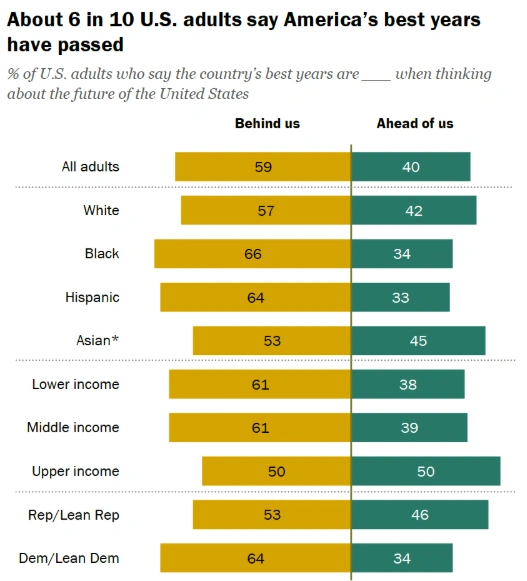
The Pew Research Center found that 59% of Americans believe the country’s best years are behind it, and the trend appears to be worsening. 57% of Americans entered 2026 more pessimistic than optimistic about the year ahead according to Marist, while Gallup’s data shows that Americans expect negative outcomes across the majority of economic, political, societal, and international measures evaluated.
And from the consumer side, Gartner recently found that the large majority of consumers feel that businesses act in an “anticonsumer” fashion:
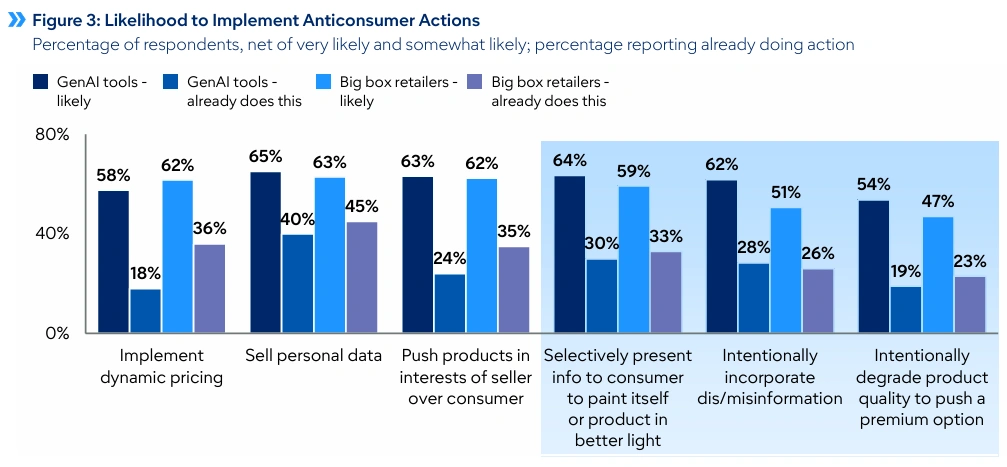
What does all this mean for someone trying to promote a positive cause? Americans have never been more ready for change.
Dissatisfaction = Unmet Market Demand
Every one of the “Six Horsemen” of Why Good is Hard gets easier to fight when your target market is looking for change. Audience motivation isn’t a problem when people are already angry. Inertia weakens when current systems are clearly failing. And the critical value proposition question “why should someone choose you over what already exists?” answers itself when incumbents have lost goodwill.
This doesn’t mean success is guaranteed. It never is. But a market that’s dissatisfied, distrustful, and actively looking for alternatives is about as fertile for a change campaign as it gets. The only question remaining is where exactly you should start.
So Where Should You Start Building a Positive Business?
This might feel a little anti-climactic, but you start at the same place every successful business (or cause) starts: market research. Research isn’t as cathartic as righteous anger, and it’s not as viral as social media. But building true market understanding is the most critical step to launching and sustaining a cause because it tells you what your market wants and the realities involved in making your dream a reality.
Below is a working checklist to help you gather that information, pulled straight from the market research process outlined in Why Good Is Hard.
Your Foundational Market Research Checklist
1. What should your market research goals be?
A good market research program provides insight into four critical elements of your cause:
- Your idea’s overall viability: does the market agree that the need you see is real and painful enough to take action?
- Your potential audience: who would choose your solution, and what would make them do so?
- Existing competition: what solutions already exist in the market, and how well they solve the audience’s pain?
- Where your potential audience seeks information to make their decision: how will you need to approach your audience to convert them?
Taken together, these items help you build a picture of what your market wants, what would make them switch to a new solution, and the level of effort you’ll need to put into launching your cause. This is the critical information that will help tell you where to start.
2. What kinds of market research should you conduct?
You can break down the types of market research into the four categories listed below. Ideally, you’ll be as thorough as possible but your level of effort will typically be determined by available resources and the scale of what you’re trying to accomplish.
- Quantitative research: data that objectively shows how your cause could fill a need and what would be involved in doing so. Think answers to questions like “how many people might want this?” or “what are people comfortable paying?”
- Qualitative research: subjective opinion data gathered from individual or group conversations that surfaces how people feel about something (and why they feel that way) in their own words
- Secondary research: anything already published by existing experts or researchers, like government reports, trade group data, academic research, etc.
- Competitive research: everything you can find on existing solutions in the space (and how well they do in meeting market needs), culled from reviews, qualitative research, web searches, or even mystery shopping.
3. How should you choose your initial market research audience?
Start with a rough sketch of who you think your ideal target would be, then look for places where those individuals gather in bulk. You can almost always find research audiences by turning to:
- Adjacent organizations like trade groups, industry associations, interest groups, and volunteer networks
- Local business resources (chambers of commerce, incubators, entrepreneurship groups, etc.)
- Local government resources, who often have mechanisms for contacting citizens
- Community groups and events, both on and offline. There are lots of forums, meetings, interest groups and other communities that are more than happy to offer their feedback
Be upfront about what you’re trying to learn — most people and organizations are glad to help someone who’s asking honestly, and an incentive for respondents never hurts. As well, the audience you start off with in your head may end up being very different than the audience your research shows wants your solution. That’s normal, so don’t be too rigid in who you target.
4. How do you find out if your idea is actually viable?
The best way to vet your cause’s viability is to ask open-ended questions that let your respondents tell you the truth on their own terms before you present your own solution. Start with the questions below:
- What’s your biggest challenge in this space?
- How are you solving it now?
- What factors drove that choice?
- Does your current solution fully meet your needs — why or why not?
- What would your ideal solution look like?
If your idea is viable, elements of it will surface in answers to the above questions. There’s no harm in asking about your specific solution once you get some of those answers, but you don’t want to bias your respondents by presenting your solution first.
And don’t panic if you find competitors already out there — their existence proves enough people feel the problem to support a business.
5. What do you need to learn about your target audience?
Part of your market research output should be an initial persona for your target audience. This persona should start with four elements:
- Demographics: objective information on who your audience is (age, income, location, etc.)
- Psychographics: a subjective profile of how your audience thinks. For example, is your audience status-driven or practical, patient or impulsive, etc.
- Pain points: what challenges your audience faces that you’re trying to solve
- Information sources: where your audience goes to learn about solutions like yours, which will influence your go-to-market plan
6. How should you research your competitors?
Don’t shy away from competition. Ask your research subjects directly:
- What’s the best solution you’ve found?
- What did you consider and reject, and why?
- What do your peers use? Why?
Then organize what you learned using marketing’s “Four Ps” — Product, Price, Promotion, and Placement. This structure helps you map how your competitors present their value propositions and where exploitable gaps might exist. Does one have a better product that costs too much? That’s an opportunity you can use.
Dissatisfied reviews and mystery shopping are gold here; a frustrated customer describing exactly what’s wrong with an existing option helps you understand precisely where existing offerings fall short.
7. What deliverables should your market research produce?
When all’s said and done, you should sum up your market research into five foundational elements that will help you start building your cause:
- A defined target audience: the demographics, psychographics, and pain points that identify who you’ll be going after
- A rough minimum viable product: the three to five elements your research says you absolutely must deliver to gain traction among your audience
- Competitive analysis: an overview of existing competitors and where they’re falling short
- A preliminary media plan: early ideas for how you’ll reach your audience
- An initial cause value proposition: that uses the 5 foundational value proposition components as its starting point
What if the research doesn’t give you a clean answer?
Market research is a decision-making tool, not a decision. It’s just as likely to hand you caution flags as red or green lights. You’re still the one who has to decide what an acceptable level of risk looks like and whether or not you should move forward.
Are You Alone?
Not in the slightest. Data shows the for-profit-for-good sector is growing:
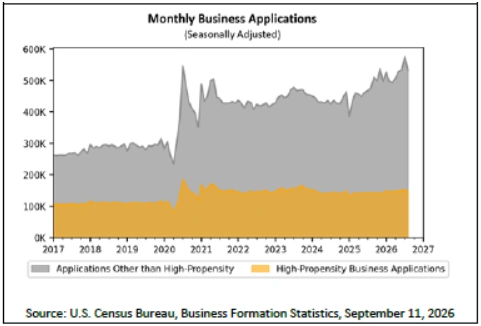
U.S. startup formation is accelerating. U.S. Census Bureau data on business formation statistics shows that September 2026 has reached an all-time high, accelerating the trend that began with COVID.
B Corp certification is rising. As of June 2026 the certified B Corp community has recorded more than 10,800 certified B Corps across 102 countries, collectively employing more than one million people. That’s growth of more than 30% year-over-year for two straight years.
Social impact is a growing part of founders’ plans. The 2025/2026 Global Entrepreneurship Monitor report — the most comprehensive annual study of entrepreneurship worldwide, drawing on data from 53 economies — found that 84% of early-stage entrepreneurs now report considering social and/or environmental impact in their business decisions, alongside record startup activity globally.
Summing it All Up
As we discussed, research is a starting point. And there sure is a lot of data showing that there’s never been a better starting point than right now.
If you follow the steps above, you’ll give yourself the best chance of success in a difficult environment. It’s going to be hard, but the world needs you to step up. Because we can’t ever let pessimism win.
If you have any questions, please contact Young Marketing Consulting today and we’ll be happy to help.
Appendix: More Data on the Challenges Americans See
What are the three biggest challenges Americans see right now? Let’s break them down.
1. Corporate greed. A national poll found that only 20% of voters trust large corporations to act in the best interests of ordinary Americans. This distrust is bipartisan, and indicates a significant frustration with existing market solutions.
2. Poor consumer experience. The American Customer Satisfaction Index posted its sharpest decline since the COVID-19 pandemic in Q2 2026, with customer complaints reaching an all-time high and nearly doubling over the past decade.
3. Political failure. 70% of Americans believe corporations and the wealthy control the government and use it to advance their own interests.
Add up the above, and you see a climate ripe for change.

A performance-driven marketing strategist with twenty years of experience growing international brands and organizations, Tim Young spent time at the Corporate Executive Board (now Gartner) and the Entrepreneurs' Organization before founding Young Marketing Consulting in 2013.
His areas of expertise include brand growth and identity development; lead generation and conversion; search engine optimization (SEO); customer satisfaction evaluation and improvement; customer segmentation and CRM work; ROI analysis and improvement; market research; and product development.
You might also be interested in these related articles:
Struggling to market "good"? Here's how to win.
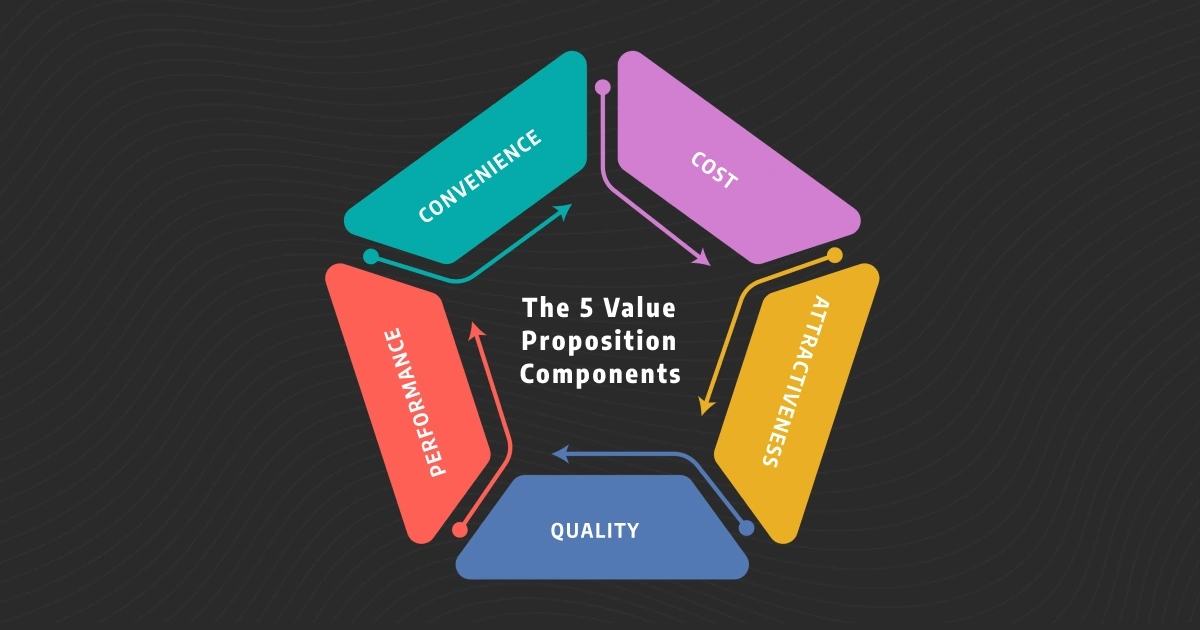
How to build a value proposition that stands out in a world where differentiation is harder than ever.